Geography of Tanzania - Africa Natural Tours ( africanaturaltours.com )
Geography of
Tanzania: Africa Natural Tours
AFRICA
NATURAL TOURS (The best tour company in Tanzania)
Specialized
in: Wildlife safaris, Cultural tourism,
Beach holiday sand
Mountain
climbing
Contact
+255 653 679 958
Tanzania
has a varied geography, including deep and large freshwater and salt lakes,
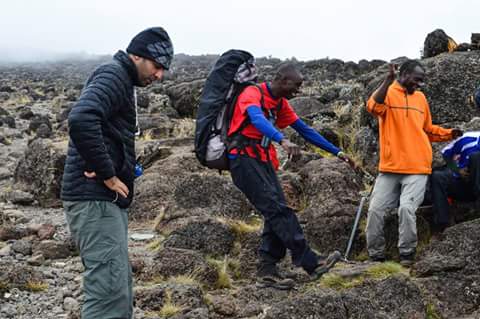
many national parks, and Africa's highest point, Mount Kilimanjaro (5,895 m or
19,341 ft)
Northeast
Tanzania is mountainous and includes Mount Meru, an active volcano, Mount
Kilimanjaro, a dormant volcano, and the Usambara and Pare mountain ranges.
Kilimanjaro attracts thousands of tourists each year.
West
of those mountains is the Gregory Rift, which is the eastern arm of the Great
Rift Valley. On the floor of the rift are a number of large salt lakes,
including Natron in the north, Manyara in the south, and Eyasi in the
southwest. The rift also encompasses the Crater Highlands, which includes the
Ngorongoro Conservation Area and the Ngorongoro Crater. Just to the south of
Lake Natron is Ol Doinyo Lengai (3,188 m or 10,459 ft), the world’s only active
volcano to produce natrocarbonatite lava. To the west of the Crater Highlands
lies Serengeti National Park, which is famous for its lions, leopards,
elephants, rhinoceroses, and buffalo plus the annual migration of millions of
white bearded wildebeest? Just to the southeast of the park is Olduvai Gorge,
where many of the oldest hominid fossils and artifacts have been found.
Further
northwest is Lake Victoria on the Kenya–Uganda–Tanzania border. This is the
largest lake in Africa by surface area and is traditionally named as the source
of the Nile River. Lake Victoria covers 69,490 sq km (26,832 sq miles),
which is Africa’s largest lake and 49% of it lies in Tanzania. Southwest of
this, separating Tanzania from the Democratic Republic of the Congo, is Lake Tanganyika.
This lake is estimated to be the deepest lake in Africa and second deepest lake
in the world after Lake Baikal in Siberia, with maximum depths of 1,470m
(4,821ft), and is 673km (420 miles) long and averages 50km (31 miles) across;
41% of its area lies in Tanzania. The western portion of the country between
Lakes Victoria, Tanganyika, and Malawi consists of flat land that has been
categorised by the World Wildlife Fund as part of the Central Zambezian Miombo
woodlands ecoregion. Just upstream from the Kalambo Falls, there is one of the
most important archaeological sites in Africa.
The
Tanzanian mainland is divided into several clearly defined regions: the coastal
plains, which vary in width from 16 to 64km (10 to 39 miles) and have lush,
tropical vegetation; the Masai Steppe in the north, 213 to 1,067m (698 to
3,500ft) above sea level.
The
centre of Tanzania is a large plateau, which is part of the East African
Plateau. The southern half of this plateau is grassland within the Eastern
Miombo woodlands ecoregion, the majority of which is covered by the huge Selous
National Park. Further north the plateau is arable land and includes the
national capital, Dodoma.
The
eastern coast contains Tanzania’s largest city and former capital, Dar es
Salaam. Just north of this city lies the Zanzibar Archipelago, a
semi-autonomous territory of Tanzania which is famous for its spices.
The
coast is home to areas of East African mangroves, mangrove swamps that are an
important habitat for wildlife on land and in the water.

For more information
visit www.africanaturaltours.com

Comments
Post a Comment